

Company News
The Dubs story: from scooters to a Neocarrier
Four founders, one hard skill — moving things through a city.
In 2021, four friends from Vantaa started a company with their summer-job savings. A local newspaper met them when they were the young team behind Bird's e-scooters. Here's what happened next — and how a scooter contract turned into a Neocarrier.
Tatu Rouhiainen
•
It started with a van and a summer-job budget
In 2021, four friends from Vantaa — Samuel Jones, Mikael Wallis, Tatu Rouhiainen and Chris Nelson — started a company with the money they'd saved working summer jobs. The name came from gaming: a "dub" is slang for a win.
The first venture wasn't logistics at all. They cleaned up and resold used sofas, moved 250 of them, and decided it wasn't the thing. The thing arrived in May 2022, when Bird advertised for someone to manage its e-scooters — the only requirements were a van and storage space. Dubs applied, and a week later were in the interview. They talked their way into 100 scooters for the summer.
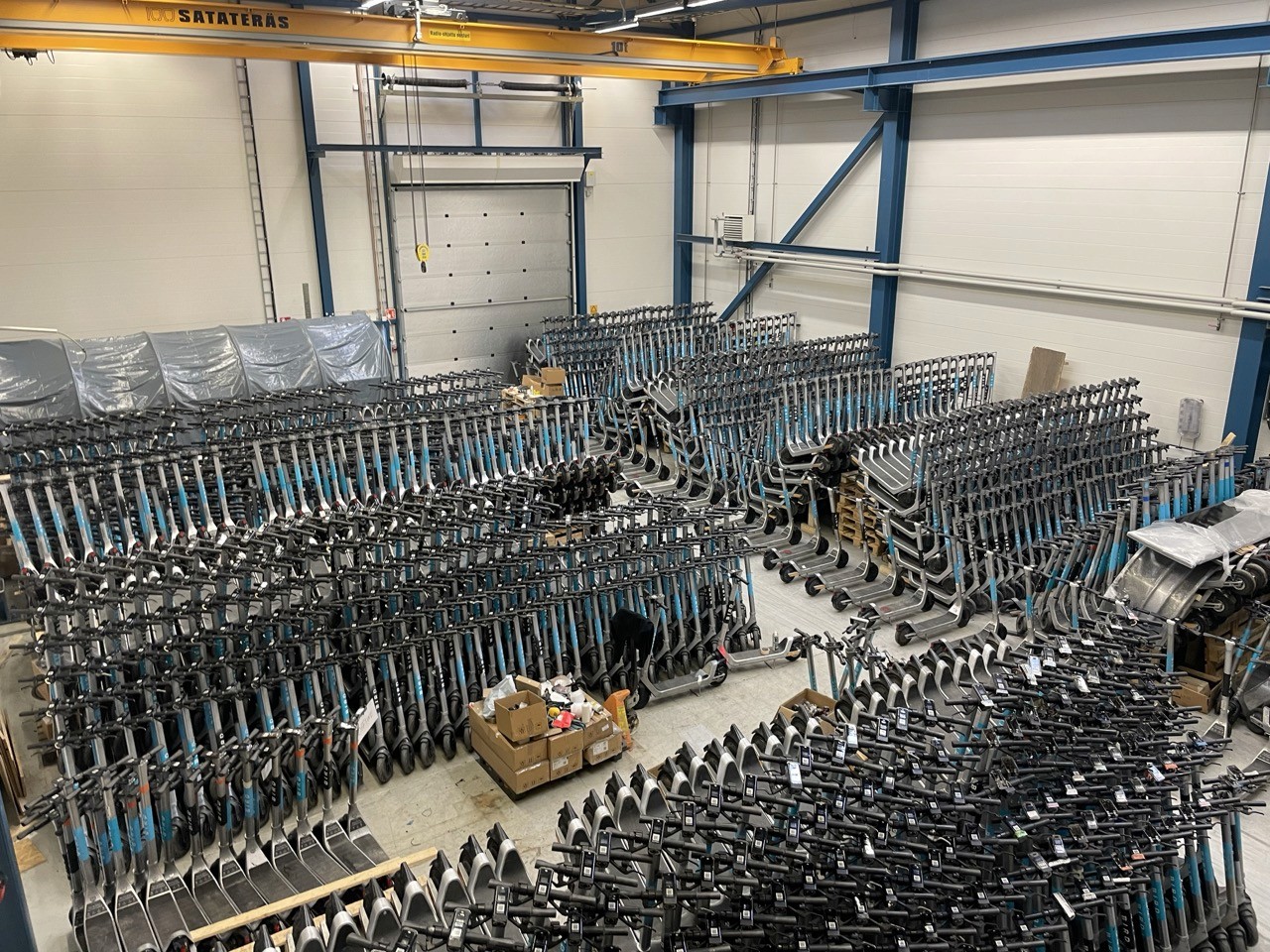
By early 2025, when Vantaan Sanomat wrote about the company, that had grown into coordinating thousands of scooters across Helsinki, Espoo and Vantaa — a warehouse, a row of vans, and dozens of young people working shifts. It read like a story about ambitious 23-year-olds. In hindsight, it was the story of a company discovering what it was actually good at.

The turning point wasn't a strategy meeting — it was scale
When you become responsible for keeping thousands of scooters on the street, and ninety-plus people working shifts to do it, spreadsheets and phone calls stop being enough.
So Dubs built its own software to run the operation — the system that became DubOS. It wasn't built to sell. It was built because the work demanded it, more or less the moment that newspaper article went to print. And that's the point where the company quietly changed shape: it stopped being a team that managed scooters, and became a team that had built the tooling to run a city-scale operation.
Once you see it that way, the scooters look small. Managing Bird's fleet was never really about scooters — it was about coordinating vehicles and the people who operate them, reliably, across a dense city, every single day. That turned out to be a rare skill. Scooters are a grain of sand next to everything a city actually needs moved.
That chapter has since closed — Bird withdrew from the Finnish market in early 2026 — but what it taught Dubs is the foundation everything now sits on: operational coordination at scale, proven under real conditions rather than described in a pitch deck.
What Dubs is now
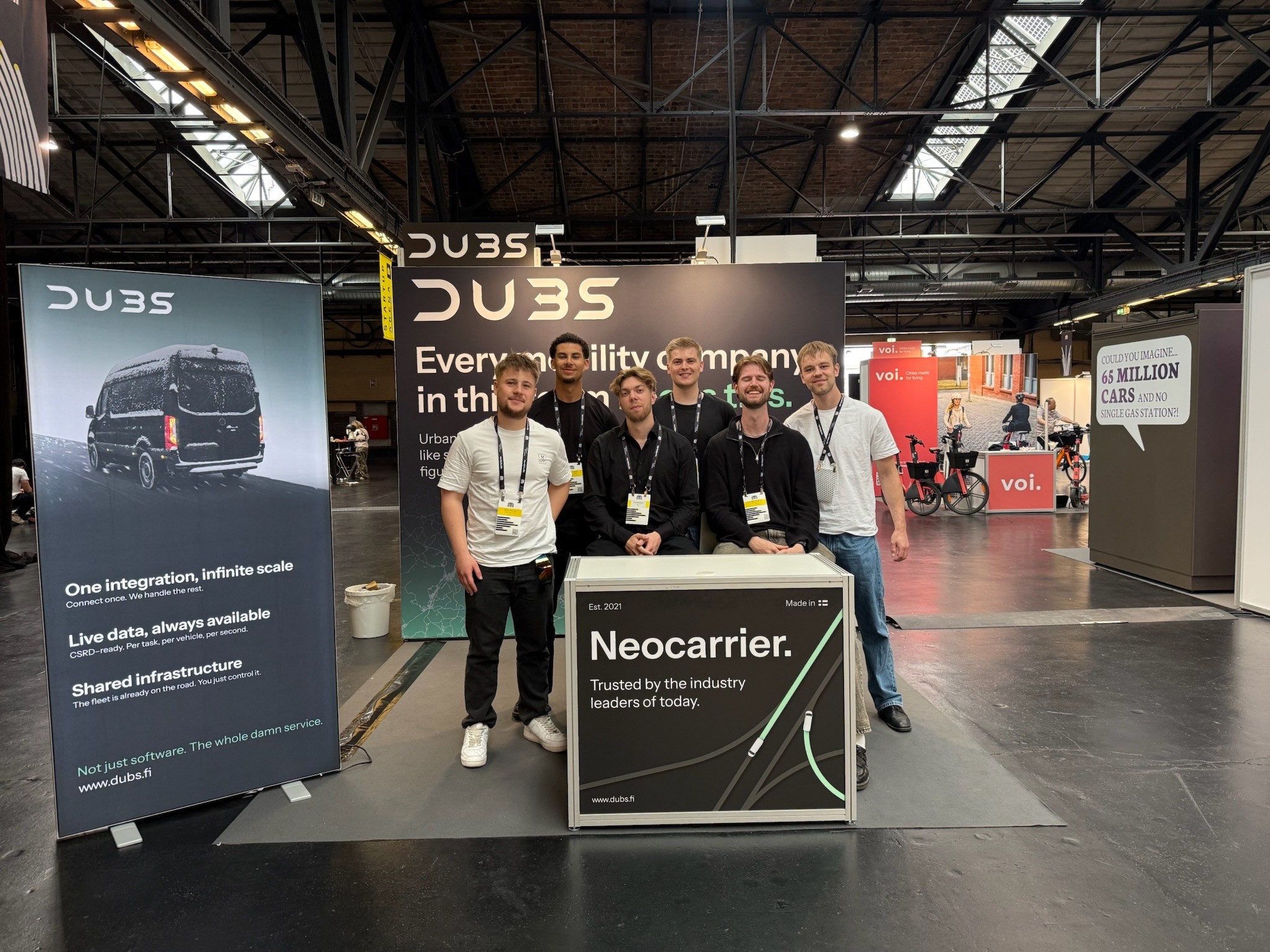
Today Dubs is a Neocarrier: a city-logistics operator that owns both its fleet and the software that runs it, built as a single system. It's a bigger idea than the scooter work, aimed at a far bigger market — because nearly everything that moves through a city needs what the scooters needed: reliable coordination, and data you can actually trust.
The company operates across four cities — Helsinki, Espoo, Vantaa and Turku — with a fleet of 16 vehicles and a network of certified drivers working alongside its own operations team. It runs autonomous delivery robots for Coco Robotics and parcel delivery for Budbee across the Helsinki metropolitan area and into Turku, and both have grown since they began.
The four founders are all still here — studies now finished — running a lean core team of six, with a seventh on the way, and building more deliberately than at any point before. The "Dubs Boys" of that newspaper story have grown up, and so has the company. What hasn't changed is the thing underneath it all: a group that is unusually good at moving things through a city. Now they're doing it as a Neocarrier — and they intend to own the category as it grows.