Technology
Robots are coming to city delivery — but most companies can't adopt them alone
Autonomous delivery is arriving faster than most people think — even through a Finnish winter
Autonomous delivery robots are scaling fast in cities, even in Finnish winters. Here's why most companies can't adopt them alone, what running a robot fleet actually involves, and where the technology still hits its limits.
Samuel Jones
•

If you think autonomous delivery robots are a distant, Silicon-Valley-only story, the numbers from your own back yard should change your mind. The change is happening sooner than most people expect — and it's happening in one of the harshest operating environments on earth.
This is already real, and it's happening in the snow
Starship Technologies' grocery robots passed one million deliveries in Finland in just under three years, working with S Group. There are now well over 650 of their robots operating across roughly 80 Finnish towns and cities — as far north as Rovaniemi, in Lapland. Robot deliveries have grown to account for as much as a fifth of S-kaupat's online grocery orders. To handle real Finnish winters, the robots run a dedicated snow mode and winter tyres.
That last detail is the surprising one. Most people assume delivery robots are a fair-weather, mild-climate technology. They're not. They operate through Finnish winter conditions — which makes it genuinely bold that Coco Robotics chose Finland, a country famous for exactly that harsh winter, as its first international market. Launching autonomy where the weather is hardest is a statement of confidence, not caution.
Coco is scaling hard, too: from roughly 1,000 robots in operation today toward a stated goal of 10,000 by the end of 2026, which would make it one of the largest autonomous delivery fleets in the world. It has already completed over half a million zero-emission deliveries, with Helsinki as its first European market.

What running a robot fleet actually involves
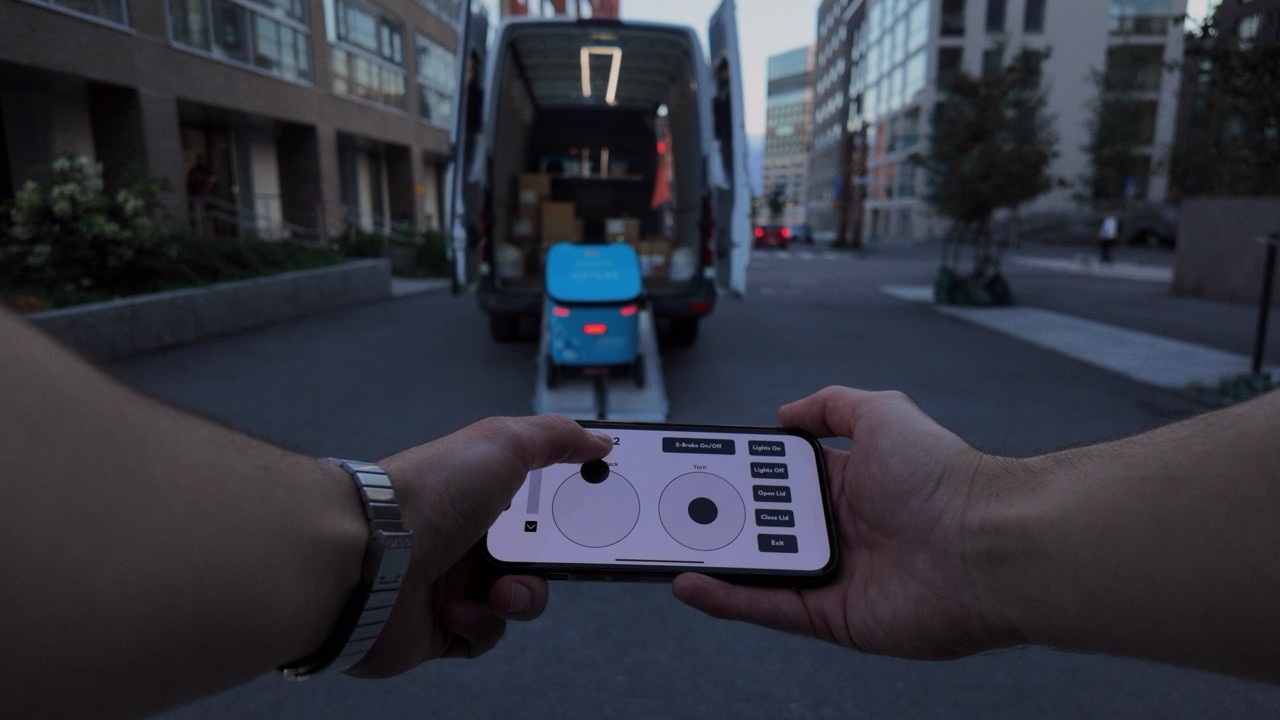
Here's what surprises people: operating a fleet of delivery robots looks remarkably like operating a fleet of shared scooters. The day-to-day is deployments, battery swaps, relocations, quality checks, maintenance, rescue tasks when a unit gets stuck, cleanups, and — this being Finland — winter preparations. It's physical, hands-on field work.
That's exactly why the operator running the robots matters as much as the robots themselves. An autonomous machine still needs a human network around it to deploy it, keep it charged, fix it, retrieve it, and keep it clean and road-ready through every season. The intelligence is in the robot; the reliability is in the operation around it.
Why most companies can't do this alone
Robotics is, fundamentally, a technological integration — and a long, hard, expensive one. Standing up a robot delivery operation from scratch is beyond what most companies can afford today, both in capital and in the operational expertise it demands. This tracks with what the Posti Logistics Trend Report 2026 found: only a small share of companies use robots today, and the majority of small firms have no plans to adopt them on their own. The technology is arriving faster than most companies' ability to absorb it.
That gap is the whole point. The likely long-term future is one where robots do a growing share of the heavy lifting in manual delivery work, as the technology matures and the cost per unit falls. But the path from here to there runs through partners — operators who already understand field robotics, because a company that wants the benefit of autonomous delivery rarely wants to build a robotics operations team to get it.
It also explains why a traditional carrier is a poor fit for this. A carrier with little technology in its DNA has no natural way to integrate and run autonomous systems — the whole model assumes vehicles and drivers, not sensors and software. Adopting robotics through an operator that's technological by nature makes far more sense than bolting it onto one that isn't.
Where the technology still hits its limits
An honest look has to include the ceiling, and today it's clear. Delivery robots are built for short distances in dense environments. The battery technology for long-route trips simply isn't there yet, which keeps service areas small. That's not a flaw so much as a fit: dense urban neighbourhoods are exactly where the economics and the range make sense, and it's no accident that the successful deployments cluster there. Robots are a last-mile, city-centre technology — powerful within that box, and not yet ready outside it.
The bottom line
Autonomous delivery isn't coming; in Finnish cities, it's already here and scaling fast, winter and all. But the robots are the easy part. The hard part — deploying, charging, maintaining, rescuing, and running them reliably through every season — is a field operation, and it's why most companies will reach autonomy through a technological partner rather than building it themselves. The future is autonomous. Getting there is a partnership.